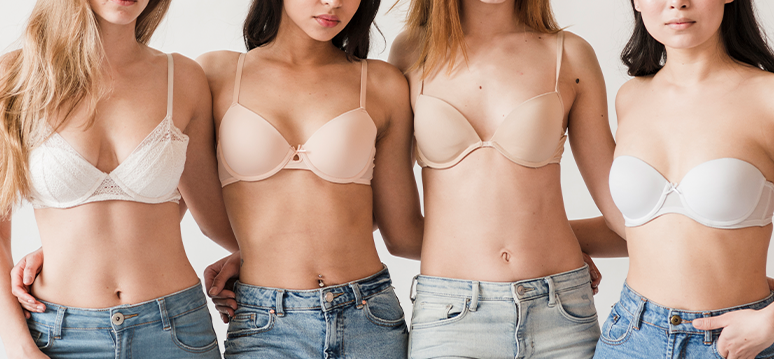
Breast structure can differ greatly between women, and it's perfectly typical to question about what's considered "standard." There's no single "right" breast silhouette; instead, we encounter a broad range of differences. Elements like genetics, age, breast tissue density, and even gestation can impact breast volume and profile. Some women possess teardrop forms, others may notice their breasts are more round, pointed, or even asymmetrical. Knowing these natural differences can help with promoting body acceptance and addressing any worries you may have.
Cone-Shaped Breasts: Features and Differences
Conical mammary glands, also sometimes described as cone-shaped, represent a frequently observed breast configuration where the base is relatively wide, gradually decreasing towards the apex. This appearance isn't a rigid standard; rather, it's a variety with considerable individual variations. Variations might display a more subtle taper, or a more marked point. Factors such as genetics, duration, physical framework, and even positional practices can all impact the concluding look. Some ladies with conical breasts might also notice a small droop which contributes to the overall silhouette. It’s important to note that breast form is incredibly manifold and what one person perceives as conical might be described differently by another – there's no single, clear-cut explanation.
Round Mammary Regions: What You Need to Be Aware Of
Many women find that their upper chests have a distinctive bell-shaped form. This doesn't generally a cause for concern, and is often just a typical variation in breast anatomy. Usually, bell-shaped breasts are fullest at the base and gradually taper towards the areola. While some sources suggest this form can sometimes be connected with a specific skeletal type, it's more probable a outcome of tissue distribution and family history. If you have any concerns about your female form or observe any changes, it's always advisable to consult with a healthcare professional.
- It's important to remember that female size and outline can change over time.
- Chest lactation and hormonal shifts can impact the look.
Exploring Curved Breasts: Anatomy and Appearance
The shape of full breasts is often connected with a specific structural build. Typically, breasts with this shape are characterized by a even curve, with a distinct projection forward from the chest structure. This often results due to the placement of milk-producing tissue and fat reserves. Although breast size varies considerably among women, the fullness often indicates a higher proportion of fat tissue compared to toned tissue, although genetics and overall physical composition play a significant role as well. This vital to understand that there "ideal" breast shape and diversity is lovely in its special way.
Asymmetrical Breasts: Causes and Considerations
Minor differences in boob size are incredibly prevalent and often benign. However, more noticeable asymmetrical breasts can sometimes indicate an root cause worthy of investigation. Various factors can result in this condition, including hormonal fluctuations during puberty, childbirth, or climacteric. Past operation, such as a breast excision, or injury to one mammary gland, can also cause asymmetry. In rarer cases, it could potentially be related to a physical irregularity or a benign tumor. While most cases require no intervention, it's always recommended to speak with a physician professional to rule out any serious medical concerns and explore potential options for cosmetic alteration if desired.
Understanding Downward Breasts
Many individuals notice that their upper chests have a downward appearance, particularly when viewed from the side. This contour isn’t uncommon and is often influenced by factors such as family history, chest tissue thickness, physical type, and even posture. While some may feel self-conscious about this characteristic, it's important to understand that chest shape varies significantly from individual to person, and drooping breasts are simply one expression of this natural diversity. Consulting a qualified professional can offer more personalized information if there are any concerns about chest well-being.
Exploring 16th-Century Breasts: Form & Characteristics
The appearance of 16th-century women’s chests is frequently misunderstood in modern popular culture. Unlike the stereotypical notion of a smaller physique, 16th-century women often possessed more ample bosoms. This wasn't necessarily due to inherent factors, but was significantly influenced by fashion and dietary habits of the era. Corsets, a common part of ladies’ attire, contributed in creating a pointed upper body, which apparently emphasized the proportions of the chests. Furthermore, the diet that was often richer in energy than that of later generations might have led to more female development. It's important to remember that differences existed, and some ladies had breasts of the uniform size.```
Knowing Athletic Breasts: What to Anticipate
Many women who engage in regular, intense physical activity, particularly powerful sports, may observe changes in the appearance of their mammary glands. Frequently, this isn't caused by increased breast tissue; instead, it's a combination of factors including tissue stretching, muscle strengthening, and maybe increased blood flow. You might experience sensitivity to heaviness, a small increase in chest size, or sometimes a fleeting discomfort after certain exercises. While it can be perfectly normal and often benign, addressing any concerns with a qualified professional is always a good idea.
```### Understanding Axillary Breast Tissue
A number of women notice a phenomenon often referred to as "side breasts" – essentially, supplemental breast glandular structure in the armpit. It's important, this isn't always a full breast; it's frequently made up of fibrous tissue and might sometimes have a bit of breast milk-producing structure. This manifestation can range greatly, including a small, barely perceptible lump to a distinct formation. This phenomenon is due to various factors including hormonal shifts, body composition, genetics, and occasionally surgical interventions. It is always to speak to a doctor to understand the cause of any abnormalities and rule out potential medical concerns.
Dealing with Ptotic Breasts: Concerns About Drooping Concerns
Many women experience breast sagging at some point in their lives, often as a natural consequence of years, pregnancy, breastfeeding, or substantial weight fluctuations. This condition, commonly known as ptosis, can impact confidence and lead to anxiety for some. While some lifestyle choices, such as maintaining a good diet and engaging in regular fitness routines, can help maintain breast tone, corrective measures like lifting surgery are frequently considered for a more dramatic and lasting improvement. It is to discuss your choices with a board-certified plastic surgeon to assess the best plan for your individual goals. Furthermore, understanding the reasons of dropped breasts can help you make informed decisions regarding your breasts.
Guberini's Chest Anatomy: A Rare Variation
Guberini breasts, also known as polythelia breast variations, represent an extraordinarily seldom anatomical anomaly. This condition is characterized by the presence of extra breast tissue, typically located underneath the normal breast placement, extending downward. While the precise causes remain largely unknown, it is generally believed to be related to disrupted development during embryonic stages. Diagnosis is usually made through a simple checkup and can be confirmed with imaging techniques like imaging scans. The appearance of Guberini breasts doesn't inherently indicate any physiological problems, though routine monitoring is advised and, in some cases, surgical excision may be contemplated for cosmetic reasons or to address any associated discomfort. It’s a true testament to the amazing diversity of human anatomy.
Exploring Columnar Breasts: The Shape
The cone-shaped chest form is characterized by a vertical appearance, often absent of the common fullness associated with other breast variations. Several women genetically possess this specific form, and it’s important to remember that it's a utterly normal variation in woman's anatomy. Factors like genetics, chest compactness, and tissue placement can every influence the overall profile also add to forming this unique silhouette. Differing from greater full bosom forms, columnar breasts tend to seem longer and smaller in width.
Understanding Spaced {Breasts: |Breasts: |Breasts:|) Structural Considerations
An presence of widely separated mammary tissue is frequently a inherent structural variation and doesn't usually imply any underlying physiological concern. Generally, the distance between the mammary glands is affected by multiple aspects, such as the person's framework structure, especially the width of the thoracic area. In addition, a amount of chest tissue and their distribution exert a crucial function in shaping the overall effect. It is important to remember that what patient views as "wide-set" is personal and may vary significantly from each individual to each.
Understanding Tightly Spaced Breasts: Variations In Form
The perceived closeness of breasts can vary significantly between individuals, resulting in a wide range of observable forms. What one person views as "close-set" might be utterly normal for another. Elements such as body structure, breast volume, areola placement, and even clothing can impact how the mammary glands are arranged. Various women experience genetically closer breast distance than another, and this is usually a case of personal build rather than a clinical problem.
Exploring Presence in Mammary Tissue: An More Thorough Analysis
The phenomenon of projection in breasts can be a source of concern for many. It’s essential to understand that breast anatomy is incredibly diverse and what might be perceived as significant projection in one woman could be entirely standard for another. Factors like family history, breast compactness, physical build, and even body position can all affect the apparent projection. Furthermore, nipple size and pigmented region size can also contribute to the total perception. While seldom indicative of a critical health condition, any sudden or considerable alteration in chest projection warrants the discussion with a qualified medical expert to exclude any underlying issues.
Exploring Female Density and Form Linkage
Emerging data implies a complex association between mammary thickness and outline. While not fully clarified, certain tendencies have been noted. For instance, women with increased female composition, often characterized by a greater amount of glandular structure, might present variations in breast outline versus those with lower thickness. This might be due to several factors, such as inherited propensity, hormonal effects, and possibly habitual options. Further study is essential to thoroughly elucidate the nature of this potential association and its consequences for female condition.
The Role on Chest Structure
The overall look of a woman's breasts is significantly affected by inherited traits. While environmental factors also play a function, the predominant determinants of mammary dimension and shape are conveyed through genetic makeup. Some ladies may receive genes that result in a typically larger chest dimension, while different women can possess genes that lead to a more petite breast dimension. Moreover, genetic variations can impact the degree of fat placement in the breast area, further defining the typical look. It's important to note that this is a complex relationship and doesn't always guarantee a specific result.
Mammary Form Alterations Throughout Years
Your breasts aren't static; their shape undergoes noticeable modifications throughout a lifetime. Puberty often brings about the initial development and rounding, influenced by hormonal fluctuations. During pregnancy, milk creation causes growth, which often somewhat reverses post-partum, though the figure might not be exactly the same. As women approach their late years, declining female hormones levels can lead to decrease of firmness, causing descending and a change in volume. While age is a significant factor, genetics, size, routine, and even previous pregnancies all play a part in how your mammary glands develop over years.
Here are the keywords:
breast shape, breast size, sagging, stretch marks, hormonal changes, milk production, breastfeeding, involution, skin elasticity, appearance, postpartum, body image, support, asymmetry, scar tissue, comfort, feeding, volume, fullness, firmness, texture, concerns, variations, individual.
Navigating Post-Pregnancy Mammary Variations
After your delivery time, it's is often usual to notice changes in their shape. These variations can range from subtle discrepancies to more changes in breast dimensions, texture, and overall appearance. Shifting hormone levels during pregnancy and breastfeeding significantly impact skin tone, which can lead a droop and the appearance of stretch marks. The process of involution - a typical return of your tissue to the previous state - often lead to scarring and changed feel of the breasts. Apprehensions regarding ease of breastfeeding and how you feel about yourself are understandable; however, support by medical experts and other women can be extremely helpful in addressing your personal differences and fostering a positive postpartum experience. Volume and breast size will usually be different compared to before you were pregnant.
Understanding Breast Form and Apparel Fit
Finding attire that truly flatters your figure can be quite challenge, especially when considering breast contour. Distinct breast figures, from genetically rounded to slightly teardrop-like, impact how fabrics hang and change the overall silhouette. This poorly adjusted bra can exacerbate such get more info issues, causing bunching or producing an awkward profile. Therefore, it is important to opt for styles that highlight your unique breast look, paying close heed to aspects like scoops, sleeve placement, and the total hang of the item. To illustrate some rounder breast might appear best in V-neck dresses, while the pointed form might benefit from structured tops with strategic embellishments.